30 November 2022

PREPARATIONS FOR SETTING UP MeSTI SYSTEM


As I mentioned in my earlier blog, MeSTI system is a minimum
Food Safety Assurance program that food business owner need to have. This system is about documenting the food safety practices of the whole matters in your food processing plant. Hence, it is a project that need precise planning and preparation.  The set up would be easier when you had prepared the relevant documents and arrangement. By then, you are just like “assembly” everything to completing a manual of Food Safety Assurance Program.
 
For a start, get ready the following documents
 
1. Company Registration document
2. Premise Registration document
3. Food Handlers Training Course certificate
4. Health / Vaccination document     
 
Make sure the food processing premise is an approved industrial area by local authorities.  Do get ready any document to proof it.  The premise should be free from any source of contamination (such as flood area, heavy industrial area, pest infestation and so on).    The food processing plant should be designed well that
 
1. The plant is build in an enclosed style
2. Water pipe system, water filter and water tank is proper installed without contamination
3. Inner part of the plant is made of smooth, easy to clean material.  The ceiling, wall and flooring shouldn’t be made  by material that could contribute contamination. The connection of wall and floor should be in a curse shape to ease the cleaning.
4. There must be facilities such as maintenance room / area, Receiving area, Toilet, changing room, hand washing station, processing area ( differentiate dirty and clean area), packing area, raw material, work-in-progress, finish product storage room, equipment room / area, chemical room, store room.
5. The material flow and Human Flow in a processing plant should be clear and in one direction to avoid cross contamination.  
 
Plan and prepare equipment for your food processing.  All equipment in the food processing plant should be smooth and easy to clean.  Therefore wooden equipment is not suitable to be used in food processing.  Measuring devices should be able to calibrated for more accurate measurement.  Make a list of both equipment and measuring devices.     
        
You should also know your product well. List your product information such as the name, form, process type, size, weight, keeping condition / method, product identification and so on.  Identify where and how the raw material is received.  Take a nice view picture of the product, draft the process flow and check each processing step if they are food safety measures need to be address to.
    
Arrange a computer-literature personnel that is familiar with food processing in your plant to handle the documentation.  The best fit for this job is the Quality Control. It is good that the personnel posses critical thinking skill too.  We would train our client to work out the system and to improve the food safety of the processing via internal and external audits.
 
Preparation is important. It is just like building a strong foundation, a frame. When you have done this, the following steps would be easier as you had set your mind - this are the stuff that I need to assemble to form a system.
 
 
Jacky Chung
Trainer and Consultant
JACKYZ SOLUTION
https://mylink.la/jzsolution18

09 June 2020

Concerns before cooking eggs

Eggs are rich in protein. Many of us consumed it, almost everyday, for breakfast. Remember during the MCO period, while we cannot go out often, what is the best food that keep us energetic? Yes, I believe egg is one of the cheapest and the best food for giving us nutrition.
But, do you know that eggs should be cleaned before you crack it to cook or boil it ?

Egg skin might contain dust, mud or chicken feaces. Some of us might not check the cleanliness of the egg before purchasing it. The egg tray might also dirty as it is paper made and couldn't be washed . So, if we are not washing the eggs, the dirts and more dangerous is, the feaces might drop to the pan / pot or contaminate our hands while we are holding the egg. This causes food contamination.
Chicken feaces contains Salmonella. This bacteria causes Typhoid that patient will suffered of stomach pain, diarrhea, vomit and could causing death. So, imagine that if we do not cook the egg thoroughly or the egg skin pieces drop into the egg, the contaminant will stay in it and consumer will have food poisoning after consuming it.

So, first of all we should make sure the eggs does not crack. Cracked eggs should be threw away as the inner part of the egg had been contaminated. Secondly, we should wash the egg before cracking it for cooking or boiling it. Use water that is slightly warmer than the egg's temperature. Avoid cold water entirely. Cold water can cause the pores in an eggshell to suck bacteria from the surface and into the egg where you don't want it. Never immerse or soak the eggs in water for more than 3 minutes. Wash the eggs under running water.  

After washing, let them sit and wipe dry with a dry paper towel one at a time. Place the clean eggs in another clean container or tray.  Do not putting back the egg to the holder. Store eggs pointed-side down to keep them fresh longer. Refrigerate the eggs immediately if you are not cooking them right away.

There have been argument in developing countries about to wash or not to wash the eggs.  But, it is better for us to wash it, considering the hazards of the feaces contents on the egg shell. 

Credit:  1. Sir Sazly Tulih 2. How to Safely Wash and Store Chicken Eggs - The Poultry Site 3. Eggs: To Wash or Not to Wash? - The Prairie Homestead

06 June 2020

Home-based Online Food Business in MCO

The most common business which we can transformed during MCO is food business, where almost everybody can do, as long as we can cook nice food. Look around us, many of our friends started to promote their new food products during MCO at whatsapp or facebook. Many of us does not have enough experience in handling food because we were from other profession before MCO. So, there is a question - do we know how to have a proper food handling, for business? Do we overlook the right way of handling food and focus only to earn a living?
We should look into the food handling practices seriously. People who did not concern about food safety would overlook the hazards in preparing food because they think what they are preparing is correct, until food poisoning cases happen...There is a young lady in Terengganu suffered from severe food poisoning (until she pass away) after she consumed the expired food product that she bought online. This incident had raise the concern of Ministry of Health. The ministry is looking into regulating all home-based online food business. All home-based food producer should register with MOH and follow a new food safety guideline.
This guideline is stating the know-how and procedures that a market place owner, admin, food organizer, food owner, food handler, food delivery and consumer that receive foods ordered online should do along the supply chain, to keep the food safety in place. Some of the guideline are basic knowledge from Food Handler Training Course, such as the auto-closed waste bin, the correct attire and the pest control. Thus, if we wish to understand the guideline better, it is best to attend Food Handlers Training Course in advance to understand the food handling principles. After that, it would be easy for us to understand the importance to follow the guideline.
Anyway, the 2009 Food Hygiene Regulations also stated that food handlers should attend Food Handlers Training Course and obtaining certificates. Both certificate and the Typhoid vaccination had become a must in every inspection and the food safety program. Thus, as long as we are food handler, especially when we want to be food business owner, in this MCO, we should have the Food handlers Training Course certificate.
The Home-based Online Food Safety guideline is equipped with a checklist for us to do self-check if we have all the preparations, the practices, the devices for doing the business. The similar checklists also available for food safety program such as MeSTI, GMP and HACCP. Each checklist has Food Handler Training Course as the checking criteria.

Knowledge is power. Only with knowledge, we can build up wisdom to build our food business. Food safety is undeniable in food business. It helps to maintain or grow your food business. Without correct food handling practices, we could lose customers and we might face legal actions from the authority.

Credit: 

1. The Star.
2. Ministry of Health

04 June 2020

Concerns about apron

Are you wearing apron when you are preparing food? What kind of apron are you using? short? with pocket? colourful? What are the purpose of wearing apron? Some of us might think that wearing apron is to prevent dirts from sticking our shirts, some might think that it looks great when wearing apron. What is your reason of wearing apron?
The actual purpose of wearing apron is to prevent dirts from our shirts to contaminate the food. As our shirts will be sticked with dirts, ash and bacteria wherever we are. Bacteria are anywhere, as long as there is oxygen. Thus, food handlers should wear apron to prevent the contamination to the food. There are some concerns about apron which food handler should take note.

Food handlers should wear light colour apron so that they could easily identify the dirts. Dark / black colour apron is not allowed as food handler would find difficulty noticing the dirts on it, if they is. So, it is better to wear white, yellow or orange apron. Then, the supervisors / QCs in food processing could inspect easily.
Do not rub hands or anything with the apron. If apron is dirty, it will contaminate the food while preparing. So, always keep the apron clean. Do not bring it outside the processing plant or bring it together to the toilet. We must understand that toilet is the most dirty place in the food processor. Hang it in a suitable place, when food handler to go out or to the toilet.

Did you or your crew wearing apron immediately when health officers are about to do inspection. Yea, it is not good. We should educate our workers the right ways in wearing apron. So that they can build a habits practise wearing apron everyday, while preparing food. If habits being built, we would not be panic when health officers is coming to your premise to do inspection.

There are aprons with pocket. THIS IS NOT A PROPER apron to be wore. When we have apron with pocket. We will likely to put in our hands (no matter washed or not) into the pockets. May be we are putting money, paper, pen, calculator, other stuff while working. The pocket would trap the dirt, our sweating. It is also difficult to be washed. So, people putting in hands and pulling out, putting things in it and taken out. There will be many dirts remain in the pocket. Just imagine, when we pull our hands into the pocket, we are risking ourselves against the contamination.

Apron is an important cloth to prevent the contamination to the food. Thus, we must make sure the apron is used correctly, to avoid the contamination to the food.

Credit: Sir Sazly tulih

02 June 2020

HACCP - A food safety assurance program for manufacturers


HACCP ( Hazard Analysis Critical Control Point) is an international recognized food safety assurance program for medicine and food manufacturers. Food exporters should obtain this certification in order to export to countries like China and USA.
The program is about identifying the potential biological, chemical and physical hazards in each processing steps and to initial control procedures for each hazards. There are several benefits of applying HACCP -


1. Reduce risk

HACCP able to determine hazards and control before product non-conformance and wastage occurred.

2. Increase stakeholders, customers and local authority's confidence

The systematic food safety management gain confidence of stakeholder.

3. Passport to export

HACCP had been a mandatory for exporting foods to USA, US and China. Since 2009, China had requested Malaysia seafood manufacturers to implement and document HACCP program before they are allowed to export to China.
4. Obtain Health Certificate faster. (export)
HACCP certified exporter could obtain Health Certificate in 3 days compare to manufacturer without HACCP certified exporter that need about 21 days. Non-HACCP certified exporter do have to send the products for lab analysis and obtain test reports. The good result of test reports is needed to get Health Certificate, while HACCP certified exporter could skip this step.
HACCP is not a stand alone program. It is formed by pre-requisite program which consist of elements such as cleaning and sanitation, personal hygiene, pest control, traceability etc. When the program is implemented and controlled, a HACCP plan can be built up based on the 7 HACCP principles -
Principle 1: To conduct a hazard analysis of every processing steps in process flow.
Principle 2: Determine critical control points (CCPs) from each identified hazard. If the hazard needs control measures to avoid food safety issue, then the step is a CCP.
Principle 3: Establishing critical limits. If the steps are confirmed to be a CCP, set the limit (maximum tolerance) of the measures that coudl avoid food safety issue.  For instance, if the CCP is the bacteria growth and the control is to keep low temperature, do set the temperature limits of the product, say <5oC. This is to state that the product temperature should be controlled to less than 5oC to avoid food safety issue.
Principle 4: Establish monitoring procedures. After setting the limits, we can set up procedure on HOW to control to the level that below the limit.
Principle 5: Establish corrective actions. Setting actions to be done when there are non-compliance in the control procedures. 
Principle 6: Establish verification procedures. This is to check if the procedures is done correctly.
Principle 7: Establish record-keeping and documentation procedures.  All records & statements, procedures should be documented, at least 2 years, or depending on the shelf life of the product.
HACCP is a systematic and robust food safety assurance program. Organization that implementing this program would be able to reduce the food safety issues. The controls are more precise than GMP or MeSTI.

Credit: 

1. Safe Food Alliance
2. Food safety & quality division, Kedah State Health Department
3. US Food & Drug Administration.
4.Institute of Agriculture and Natural ResourcesUNIVERSITY of NEBRASKA–LINCOLN
5. LLOYD'S REGISTER MALAYSIA

30 May 2020

Good Manufacturing Practice - a guarantee of confidence


Good Manufacturing Practice (GMP) is a program to ensure consistent production that comply food safety measures. It helps to prevent cross-contamination, adulteration, and mislabeling, resulting cut down on losses and waste, and protects both the company and consumer from negative food safety events.


GMP is a food safety assurance program that every food processor should have.  It is foundation for preparing HACCP.  As MeSTI, GMP compliance company gain customers' confidence more than the company that does not have.  Some importers prefer to import goods from exporter that have food safety assurance program such as HACCP, GMP and MeSTI. 

The followings are the GMP guidelines - 

1. Quality Management
2. Sanitation & hygiene
3. Building and facilities / premises
4. Equipment
5. Raw Material
6. Personal
7. Validation and qualification
8. Complaints
9. Documentation and record keeping
10. Inspections and quality audits

These elements would be focused to set up a complete system with SOPs, control and verification.  Every controls and verification would be recorded for future reference or audit purposes. Records are important so that certain issues could be traced when there is a need, such as during product recall or customer complaint.  The GMP system could also be a tool for exporter / manufacturer to discuss the reason of product failure.

To apply GMP, manufacturer could apply from Food Safety and Quality department (FSQ) of Ministry of Health (MOH). After submitting application form, supporting document, GMP manuals and making payment, FSQ would do an adequacy audits (on the submitted document).  When the audit is done, they will schedule a compliance audit on the manufacturer.  There will be a auditors team with a lead auditor have on site and document audit.

After the audit, CARs (if there is any) would be issued to the manufacturer to comply within a period that declared by the manufacturer.  When all CARs are replied, auditor would check on the reply and to discuss whether to close all CARs or request a follow-up audits.  When all CARs are replied, the auditor will support the manufacturer to obtain GMP certification to MOH and the ministry will issue GMP certificate to the manufacturer.

That is not the end, MOH would schedule surveillance audit to the manufacturer once or twice a year. Thus, manufacturer should get ready all records at all time. When the controls had become a routine, the GMP system will be maintained well.     


Credit: 

1. Safety Culture
2. Food Quality & Safety Department, Kedah State health department.
 

28 May 2020

PAH at food

PAH (Polycyclic aromatic hydrocarbon) is a pollutants resulted from incomplete combustion.  It is also excreted when cooking at high temperature on food with high fats.

This chemical is useful in industrial production but not in food. PAH is a carcinogenic to human by binding to cellular proteins and DNA, resulting cell damage which lead to mutations, tumour and finally cancer.  PAH also reduce the immunity function of the body.     

Factors that effects PAH contains in food are cooking method, burning temperature, smoking process, smoking stage, lipid contents, environment contamination and so on. Food that contain PAH has high level of fats that is grilled, smoked such as sate, meat, barbecues chicken, fish or meat. For instance, scientist discovered smoke fish and meat contains 200 microgram / kg of PAH, barbecued meat contain 130 microgram / kg, charcoal grilled on duck breast steaks without skin had 320 mikrogram / kg and so on. 

To reduce the PAH contents while preparing food, we could

1. Avoid barbecue directly on fire. Use wrappings such as banana leaves of aluminium foil while barbecue or using quarry.

2. Cook slowly, such as adjust small quantity or burning.

3. Throw / reduce fats in the food before barbecue

It is not to say that we should not consume high temperature cooking of food but just to reduce the frequency of consumption. With that we could have a better diet, for us and our family.

Credit: 

1. Sir Sazly Tulih
2. Health Education Division, Ministry of Health Malaysia
3. Science Direct

26 May 2020

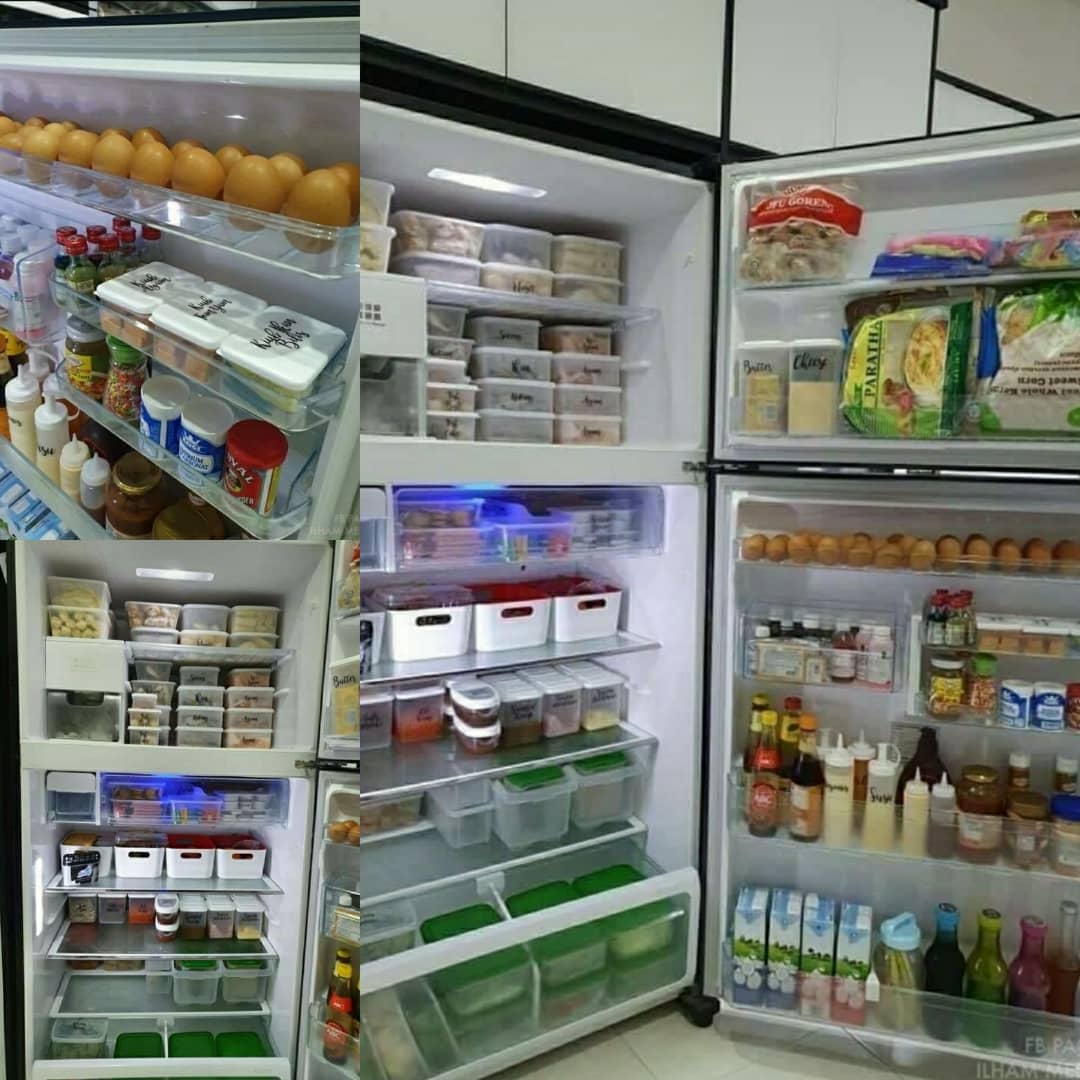
5 Tips of food storage at refrigerator


The storage of food in refrigerator had been a common practice to prolong the food freshness. However, there are a few things we should always take notes so that the food preservation is done efficiently. The followings are the important tips for your reference.

Tips #1
After purchasing food, do light cleaning, cut into suitable small pieces (if the incoming raw food is in big sizes, such as meat, fish and chicken) and keep the food into a clean and suitable airtight container. Small pieces of food will ease the process of cooling. Meat, chicken, fish and other high risk food should be kept at freezer area nicely. Put all food in order and do not put too close for one another so that all portion of these high risk food can be frozen thoroughly. Too much food in the refrigerator will block the cooling units, resulting the cooling is not efficiently done. Cool air should be circulating in the whole refrigerator. Store fruits and vegetables susceptible to drying out in perforated or unsealed plastic bags to maintain a moist environment yet still allow air to circulate.

Tips #2

It is advisable to label raw food, the food ingredient, leftover food etc as the food's name and the date of purchasing. For packaged food, refer to the expired date / Use-by date before use. Apply FIFO based on the date. With that, we can make sure to use the correct food (as we had labelled) in our food preparation / processing. And also, we could make sure to use only good quality food.
Tips #3
Every Ready-To-Eat (RTE) food should be put above the raw food to avoid cross-contamination. There are several parts of refrigerator that is for the storage of certain type of food. Always take out the RTE food from the refrigerator and consume not later than 2 days after cooking / open (packaged). There are also recommendations from food expert about the storing time of each food.

Tips #4

After we open can food, we should finish the food and do not put them back into the can and stored into refrigerator. After open milk cream can by can opener, pour the milk cream into a clean container and close it. The opened can could corrode and the residual metal of the can once open can leach into food, leaving a metallic taste.

Tips #5
Do checking the functions of the refrigerator oftenly. Make sure the temperature at every compartment are correct. Do not always open and close the refrigerator door to avoid the temperature of food increasing / the food is not cooled properly.

The above tips will helps us to preserve the food efficiently in the refrigerator. Only when the food is stored correctly, we could enjoy good quality and save food.

Credit: 

1. Sir Sazly Tulih
2. High Speed Training
3. Real Simple
4. U.S. Department of Health & Human Services 

23 May 2020

Fungus in food - do not let it take your life!

Fungus is microscopic microorganism that can grow in food. Most fungus is hazardous as it will produce mycotoxin, resulting food poisoning.

"Myco" means fungus and "toxin" means poison. It is a metabolit produced by hazardous fungus, such as Aflatoxin. Aflatoxin is a mycotoxin group that is form naturally from particular fungus such as Aspergillus flavus and Aspergillus parasiticus.

There are a few conditions that causing food contaminated with Aflatoxin:

1. Food that exposed to high environment moisture, in a long time.
2. Food that is stored in pile, without good ventilation.

What are the food that potentially contaminated with Aflatoxin?

1. Beans - groundnuts, pistachio, peanut butter, almond soybean, peanut, sunflower, cotton seed, walnut, coconut and Brazil nut.
2. Cereals - Corn, rice, wheat, soybean oil, corn oil, sunflower oil and sorghum
3. Spices - Chili, black pepper, turmeric, ginger, coriander
4. milk of animals that are fed with contaminated feed, in the form of aflatoxin M1.

Exposure to Aflatoxin at a higher dosage and for a long time could lead to Aflatoxicosis (which could be life threatening) that cause liver cancer. Knowing the seriousness of Aflatoxin contamination, we should learn to handle our food in order to avoid it. below are the advises from the experts -

1. Keep food in a dry place and hermetic, according to the storage instruction stated at label. make sure the store in inn good ventilation and with low humidity.
2. Choose good quality beans or cereals carefully while purchasing.
3. Avoid taking food which has the signs of spoilage such as fungus growth or physically changed on food.
4. Threw away food that is contaminated with fungus. Even when fungus is removed, mycotoxin would be still remained in the contaminated food. Thus, make sure the contaminated food is not to be used to process / prepare food.

Contaminated food not only resulting food poisoning but also could be fatal. As a responsible food handler, we should take note on this matter and do any possible practice to avoid it.

Credit: 

1. Sir Sazly Tulih
2. World Health Organization
3. National Center for Biotechnology Information
4. Science Direct